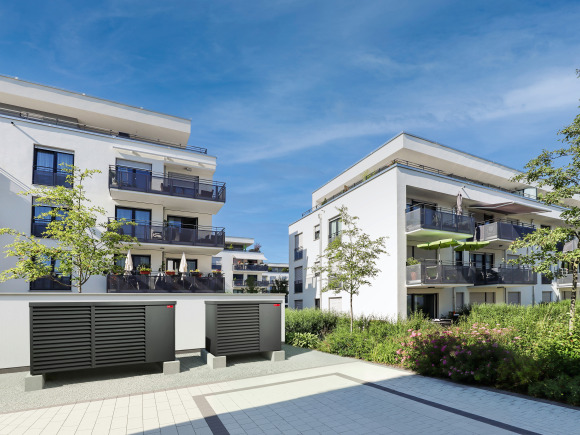
How Quiet Is the Hoval Belaria pro?
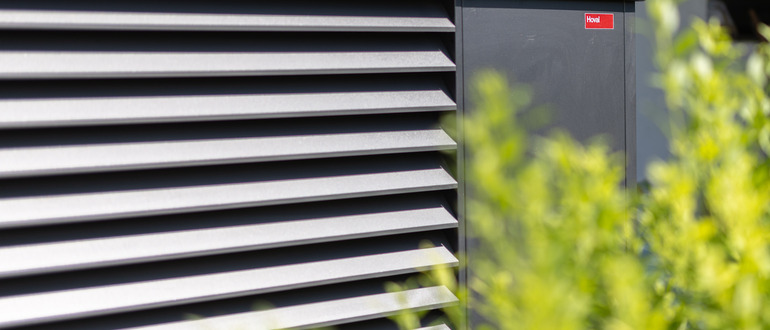
Measured Noise Levels You Can Specify With Confidence
- Blog
- Expert - Engineer
In commercial and multi residential developments, acoustic performance is not a secondary consideration. It can determine whether a project gains planning approval, whether mitigation measures are required and ultimately whether a scheme remains financially viable.
For consultants and designers, the question is straightforward:
Can this heat pump be installed without creating a future noise issue?
The Hoval Belaria pro has been engineered specifically to address that concern.
Why Noise Levels Matter in Commercial Applications
Heat pumps are increasingly installed in:
Densely built urban environments
Residential complexes
Care facilities and healthcare settings
Schools and public buildings
Rooftop plant installations
In these applications, a few decibels can make the difference between compliance and costly redesign.
Acoustic assessments, particularly under BS 4142, rely on accurate declared sound power levels. Manufacturers who provide transparent, standardised data make specification and modelling far more reliable.
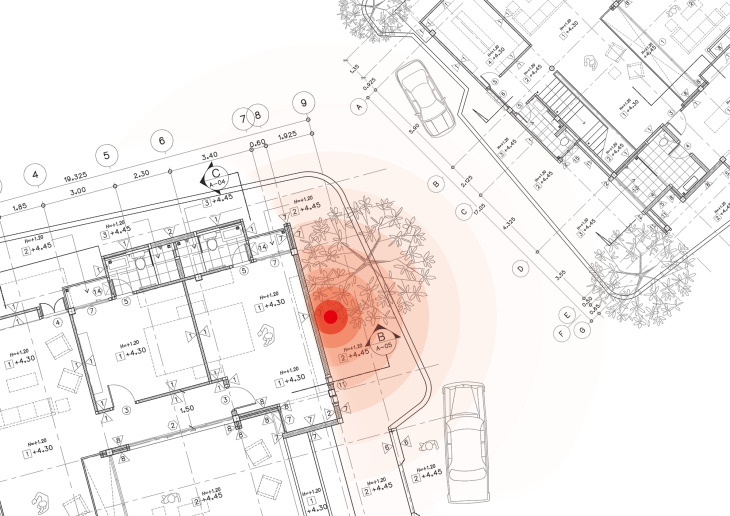
Measured Sound Power Levels You Can Model With Confidence
The Belaria pro has been tested in accordance with EN 12102.
Declared sound power levels for the outdoor units are:
55–56 dB(A) depending on model
Maximum day operation levels of 62–65 dB(A)
Across the 20, 25, 40 and 50 kW models, the sound power level remains tightly controlled despite outputs of up to 48 kW per unit.
Importantly, sound power level is measured in controlled laboratory conditions and is not affected by distance or installation environment. This makes it the correct figure for use in acoustic modelling and planning submissions.
For consultants, that means predictable performance rather than uncertainty.
Quiet by Design, Not by Compromise
Low acoustic performance is not achieved by limiting output. It is achieved through engineering.
The Belaria pro incorporates:
Compressor mounted on sound absorbing mounts
Low vibration mechanical design
Additional encapsulation around acoustic components
Specially soundproofed outdoor casing
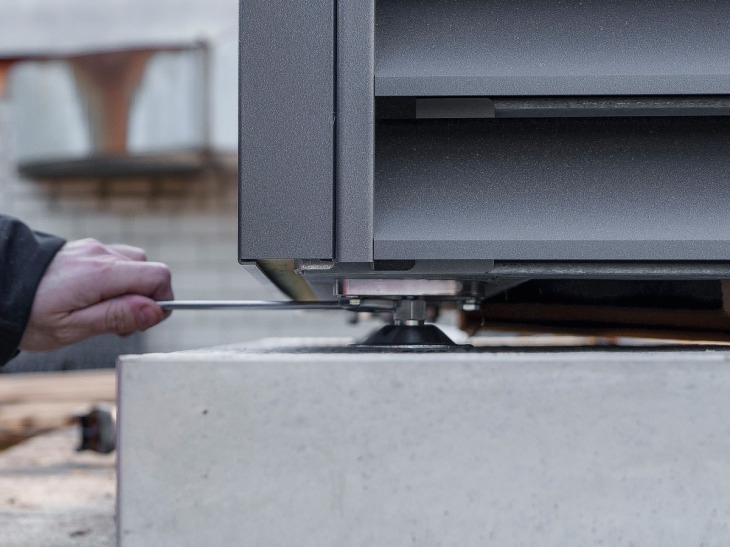
Vibration damping feet as standard
Forward air discharge directed towards the ground
The forward discharge design is particularly beneficial for rooftop installations, as it reduces upward sound projection towards upper storeys.
Structure borne noise is addressed through vibration decoupling, allowing installation directly onto roof slabs without excessive secondary isolation measures in most applications.
Modulation Reduces Acoustic Peaks in Real Operation
Commercial heating systems rarely operate continuously at full load. Most of the year is spent at part load.
The inverter driven compressor technology within the Belaria pro ensures:
Output matches demand
Fan speeds reduce at lower loads
Cycling is minimised
This significantly reduces sudden acoustic peaks and improves overall acoustic comfort.
In practice, this is just as important as the declared maximum sound power figure.
What Influences Noise on Site?
Declared sound power provides a reliable baseline. However, consultants should also consider:
Distance from receptors
Reflective building surfaces
Installation height
Screening and acoustic barriers
Operating load and ambient temperature
By providing measured sound power data under recognised standards, the Belaria pro allows accurate modelling during the design phase, reducing the likelihood of unexpected mitigation costs later.
Designed for Densely Built Environments
Heat pumps intended for large buildings must balance output and acoustic performance.
With scalable outputs from 20 to 200 kW in cascade and tightly controlled sound power levels, the Belaria pro offers a solution suitable for:
Residential developments
Commercial properties
Public sector buildings
Retrofit schemes in noise sensitive areas
For planners and consultants, that means confidence at specification stage and fewer surprises during commissioning.