
Domestic hot water design in the era of low-carbon heating

Low-carbon heating is about more than choosing the right heat source. Discover how domestic hot water design can influence system efficiency, operating costs and carbon performance, and why a whole-system approach is key for low-carbon buildings.
- Blog
- Expert - Engineer
When designing a low-carbon heating system, the heat source tends to be the primary focus. Heat pumps, renewable technologies and reduced operating temperatures are all important considerations, but they are only one part of the wider picture.
The performance of any heating system depends on how effectively the entire system works together. Domestic hot water (DHW) is often a key part of that system and, should be considered carefully, as its inclusion can have a significant impact on efficiency, operating costs and overall carbon performance.
Why domestic hot water is different
Domestic hot water and space heating can place very different demands on a system. While many modern heating systems can provide comfortable space heating using relatively low water temperatures, domestic hot water typically requires higher temperatures and must be available whenever occupants need it. In some buildings, such as hotels, leisure centres and student accommodation, hot water demand can be particularly challenging. Large volumes of hot water may be required over short periods, creating significant peaks in demand that the system must be capable of meeting.
Domestic hot water should not be viewed as a separate consideration. Instead, it should be treated as an important part of the overall heating system design.
Why efficiency depends on more than generating heat
When discussing low-carbon heating, it is easy to focus on how heat is generated, however it is equally important to consider how effectively that heat is utilised once it has been produced. In conventional domestic hot water systems, the primary objective has simply been to ensure sufficient hot water is available. While this approach means demand is always successfully met, it may not make the most effective use of the energy.
Modern low-carbon systems place a greater emphasis on maximising the amount of useful heat extracted from the primary circuit before it returns to the heat source. In simple terms, the aim is to align the primary heating and return temperatures so they are better suited to lower temperature heat generators and maximise the use of this equipment, resulting in significant energy and therefore carbon savings.
For heat pumps in particular, this becomes increasingly important. Producing the higher temperatures required for domestic hot water can be one of the most demanding operating conditions for a heat pump, making effective use of that energy especially valuable.
Meeting hot water demand without compromising efficiency
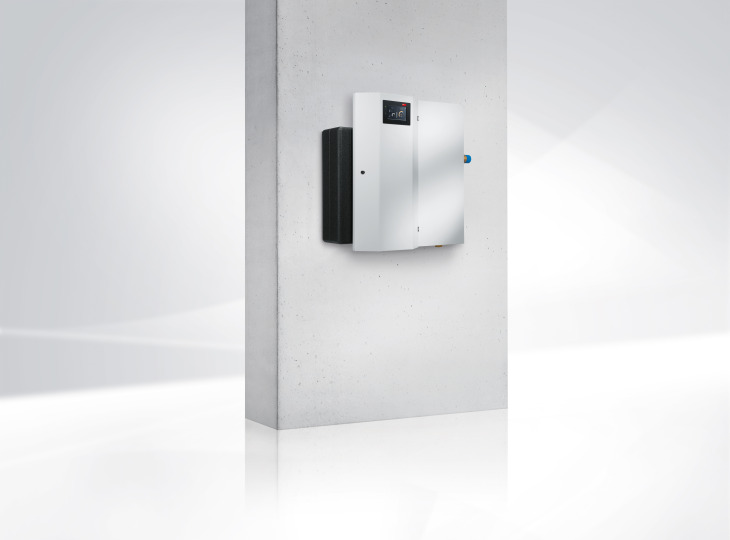
One approach to achieving this balance is through the use of a charging station such as the Hoval TransTherm aqua L. Rather than focusing solely on producing hot water, the system is designed to transfer as much useful heat as possible from the primary heating circuit into the domestic hot water system. By maximising heat transfer, the system can achieve significantly lower return temperatures than many conventional approaches.
The TransTherm aqua L works alongside a storage vessel, allowing hot water to be generated efficiently and stored for use during periods of peak demand. This means buildings can maintain reliable hot water availability while also supporting efficient heating system operation.
Why this matters for low-carbon buildings
As buildings continue to transition towards lower-carbon heating technologies, system efficiency becomes increasingly important. The more effectively heat is transferred into useful hot water, the better use is made of the energy already being generated. This can help improve overall system performance and reduce the amount of energy required to meet demand.
Improved efficiency can also contribute to lower operating costs. By making better use of generated heat, the heating system can deliver the required hot water output with less energy input than might otherwise be required.
There are sustainability benefits too. Lower energy consumption generally results in lower associated carbon emissions, helping organisations reduce the environmental impact of building operation.
Ultimately, low-carbon heating is about more than simply selecting a low-carbon heat source. It is about ensuring that every part of the system works together to make the most effective use of the energy available.